
 EUR
 Mexico · MXN
 United States · USD
How to choose a good omega 3: the guide that actually reads the label
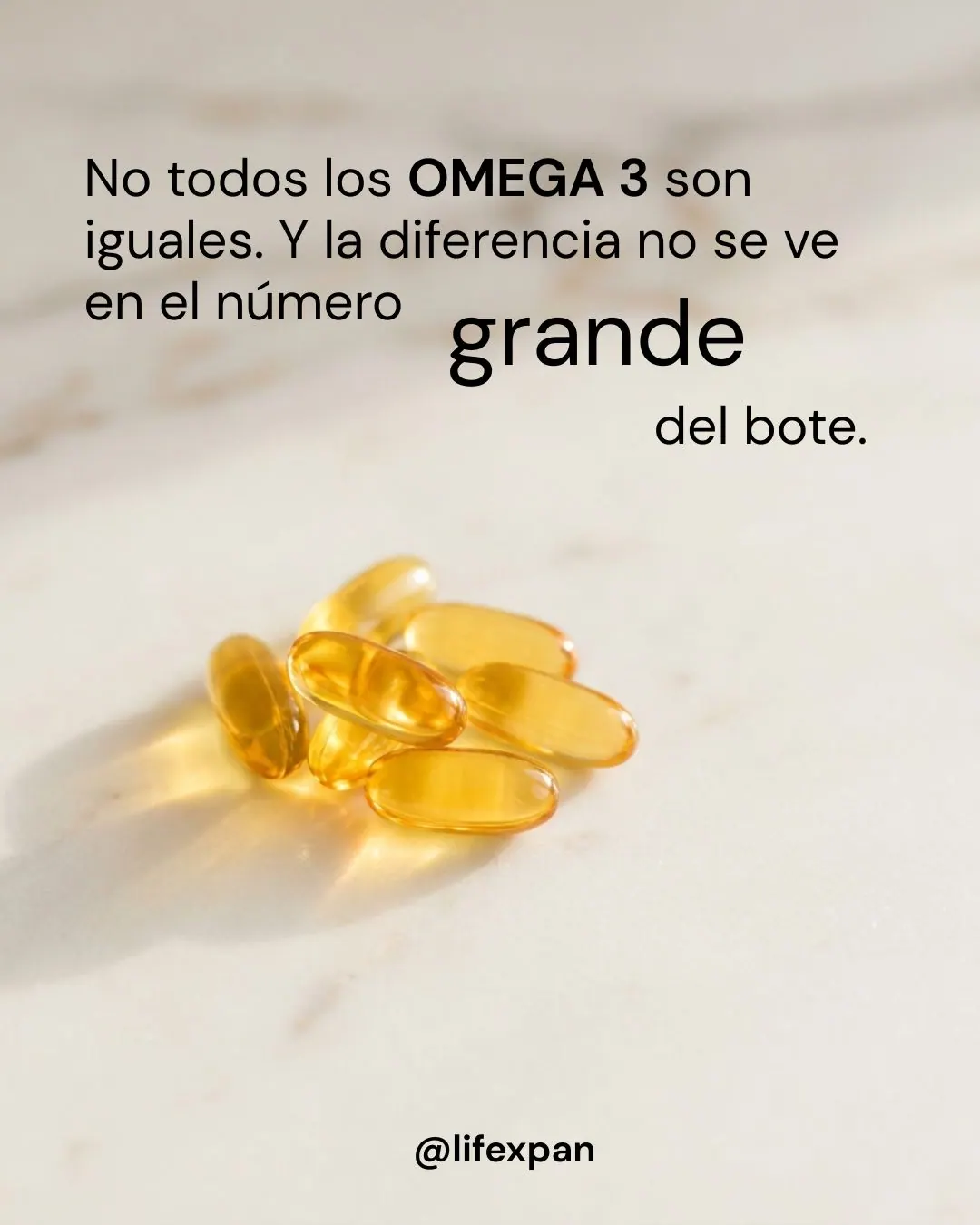
You go to the supermarket or the pharmacy, pick up a bottle of omega 3 with "1000 mg" written in big letters, and take it home thinking you've made a smart purchase. The problem is that number tells you almost nothing about what actually matters — and there's a good chance that product is poorly dosed, in a form your body absorbs badly and, in some cases, already oxidised before you even open it.
Omega 3 is one of the most scientifically backed supplements out there: it plays a role in cardiovascular, brain and joint health, and in regulating inflammation. But it's also one of the supplements where quality varies most from brand to brand. And that difference doesn't show up in the big number on the bottle — it shows up in the small print.
This is your guide to reading that small print like an expert. Five criteria that will help you tell a quality omega 3 from one that only looks like it.
🐟 Buying guide · 7 min read · Informational content

Criterion 1: look at the actual EPA and DHA, not the total milligrams
This is the most common mistake, and the most costly one. When a bottle says "1000 mg of fish oil", that figure refers to the total oil — not to the fatty acids that actually matter. What matters are EPA and DHA, the two active omega 3s.
Many mass-market products hide an inconvenient truth: of that 1000 mg of oil, only around 180 mg is EPA and 120 mg is DHA. The rest is other filler fats. To reach a useful dose you'd need to take several capsules, which means the "budget" bottle ends up being expensive after all.
What to look for: turn the bottle round and check the nutritional table. Look for the specific figures for EPA and DHA per capsule, not the total oil content. A good omega 3 states those amounts clearly. As a general reference, a maintenance intake is usually around 500 mg or more of combined EPA+DHA per day.
💡 In simple terms
If the label just says "omega 3" or "fish oil" without breaking down how much EPA and how much DHA it contains, be wary. It's like buying a juice labelled "with fruit" without saying what percentage. Transparency in the figures is the first sign of quality.
Criterion 2: form matters — triglyceride versus ethyl ester
Here's a criterion almost no one knows about, and it makes a huge difference to how much omega 3 your body actually makes use of. The omega 3 in supplements can come in two main forms: triglyceride (TG) —the natural form, as found in fish— or ethyl ester (EE) —a processed form that's cheaper to produce.
The difference is far from minor: studies show that the triglyceride form is absorbed considerably better than ethyl ester. What's more, ethyl ester is more prone to oxidation. The problem is that many manufacturers use ethyl ester precisely because it makes the product cheaper, and they don't always state this clearly.
What to look for: the label should say "triglyceride" or the letters "TG" (sometimes "rTG", re-esterified triglyceride, is also fine). If the form isn't specified, it's most likely ethyl ester — the less absorbable option.

Criterion 3: oxidation — the invisible problem
Omega 3 fatty acids are delicate: they oxidise easily when exposed to heat, light and oxygen. An oxidised —rancid— omega 3 doesn't just lose effectiveness, it can actually work against you. And what's most concerning is that a large share of the products on the market are already partly oxidised by the time they reach your hands.
The technical way to measure this is the TOTOX value (total oxidation). GOED, the leading international organisation for omega 3, sets a maximum limit of 26 — but the lower, the better. A premium product usually keeps values below 10.
What to look for: two things. First, that the manufacturer mentions oxidation controls or low TOTOX values. Second, a simple trick you can do at home: open a capsule and smell it. Fresh omega 3 has a mild, sea-like smell. If it gives off a strong, rancid or unpleasant fishy odour, it's oxidised. "Fishy burps", incidentally, aren't normal — they're usually a sign of low-quality or oxidised oil.
🔬 Key fact
A natural antioxidant such as vitamin E, added to the formula, helps protect the oil from oxidation and keep it fresh. Its presence on the label is a good sign that the manufacturer has taken product stability seriously.
Criterion 4: purity and independent certification
Fish accumulate contaminants from the sea in their fat: mercury, lead, dioxins, PCBs. A good fish oil goes through a molecular distillation process that removes these contaminants. A cheap, poorly purified oil can carry them straight into your capsule.
The way to make sure is to look for independent certification from an external laboratory that verifies what the manufacturer claims. The gold standard in omega 3 is the IFOS (International Fish Oil Standards) seal, which checks three things at once: that the EPA and DHA content matches the label, that there are no heavy metals or contaminants, and that oxidation levels are low. Other certifications such as GOED also provide reassurance.
What to look for: the IFOS seal or an equivalent on the packaging. An independent certification is the difference between "take our word for it" and "a third party has verified it".
Criterion 5: the source of the fish
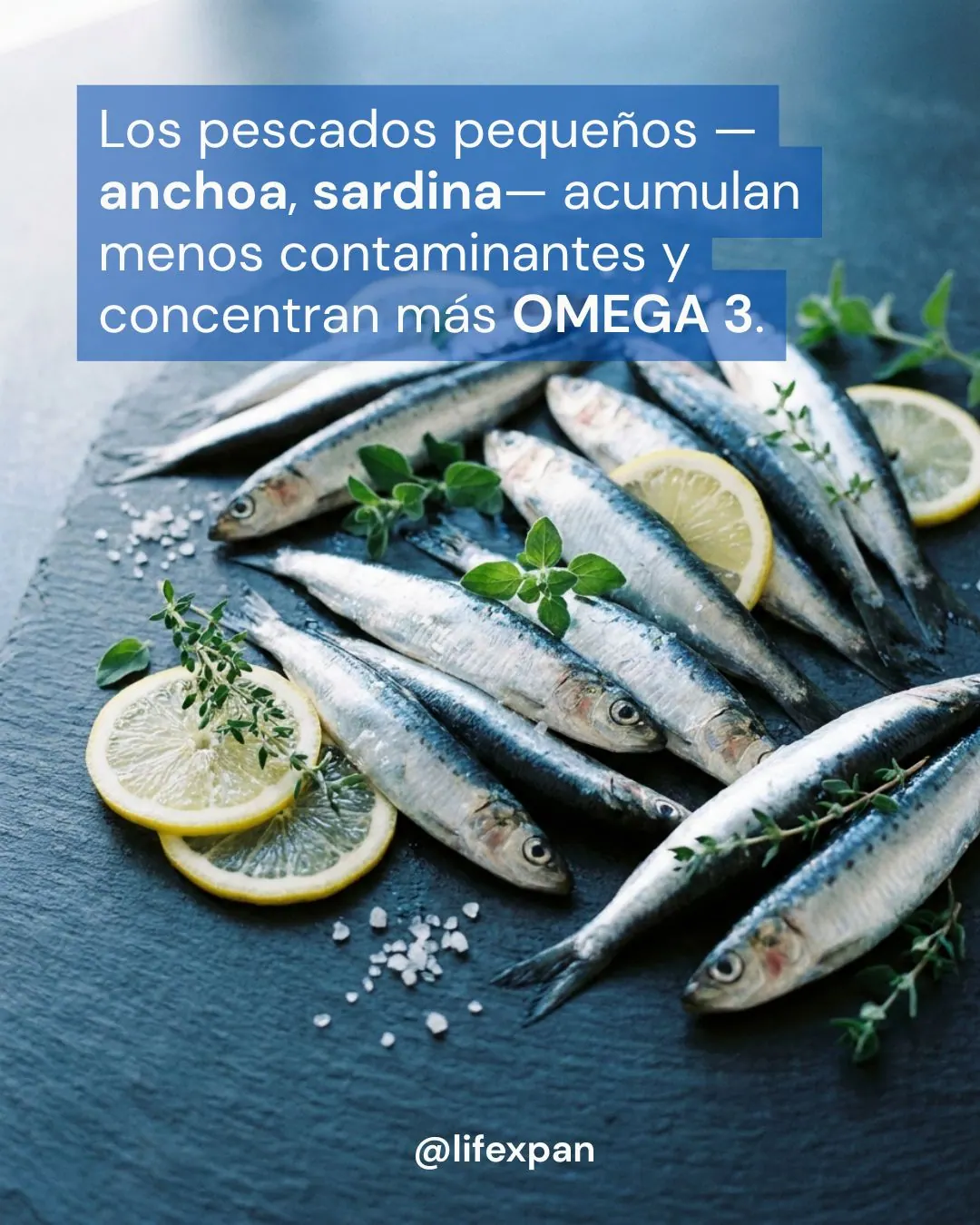
Not all fish are equally good sources of omega 3, nor are they all caught in an equally sustainable way. Small, short-lived fish — anchovy, sardine, mackerel — accumulate fewer contaminants than large predators, and tend to offer an excellent concentration of omega 3.
Peruvian anchovy, in particular, is recognised for having one of the highest concentrations of EPA and DHA of any fish, and its fishing in Peru is regulated with sustainability criteria in mind. A source like this is a good indicator of quality.
What to look for: the label stating the source of the fish. Terms such as "anchovy", "sardine", or sustainable fishing certifications (MSC, Friend of the Sea) are positive signs.
✨ The quick checklist before you buy
1. Does it state EPA and DHA separately and in sufficient amounts? · 2. Is it in triglyceride (TG) form? · 3. Does it mention oxidation controls or contain vitamin E? · 4. Does it carry the IFOS seal or another independent certification? · 5. Does it state the source of the fish? · If it ticks all five boxes, you're holding a quality omega 3.
How LifeXpan's Ultra Pure Omega 3 meets these criteria
Here it is in a minute
When we added Ultra Pure Omega 3 to LifeXpan
View this post on Instagram
With these five criteria in hand, it's easy to assess any omega 3 on the market — including ours. We designed Ultra Pure Omega 3 to meet every single one of them:
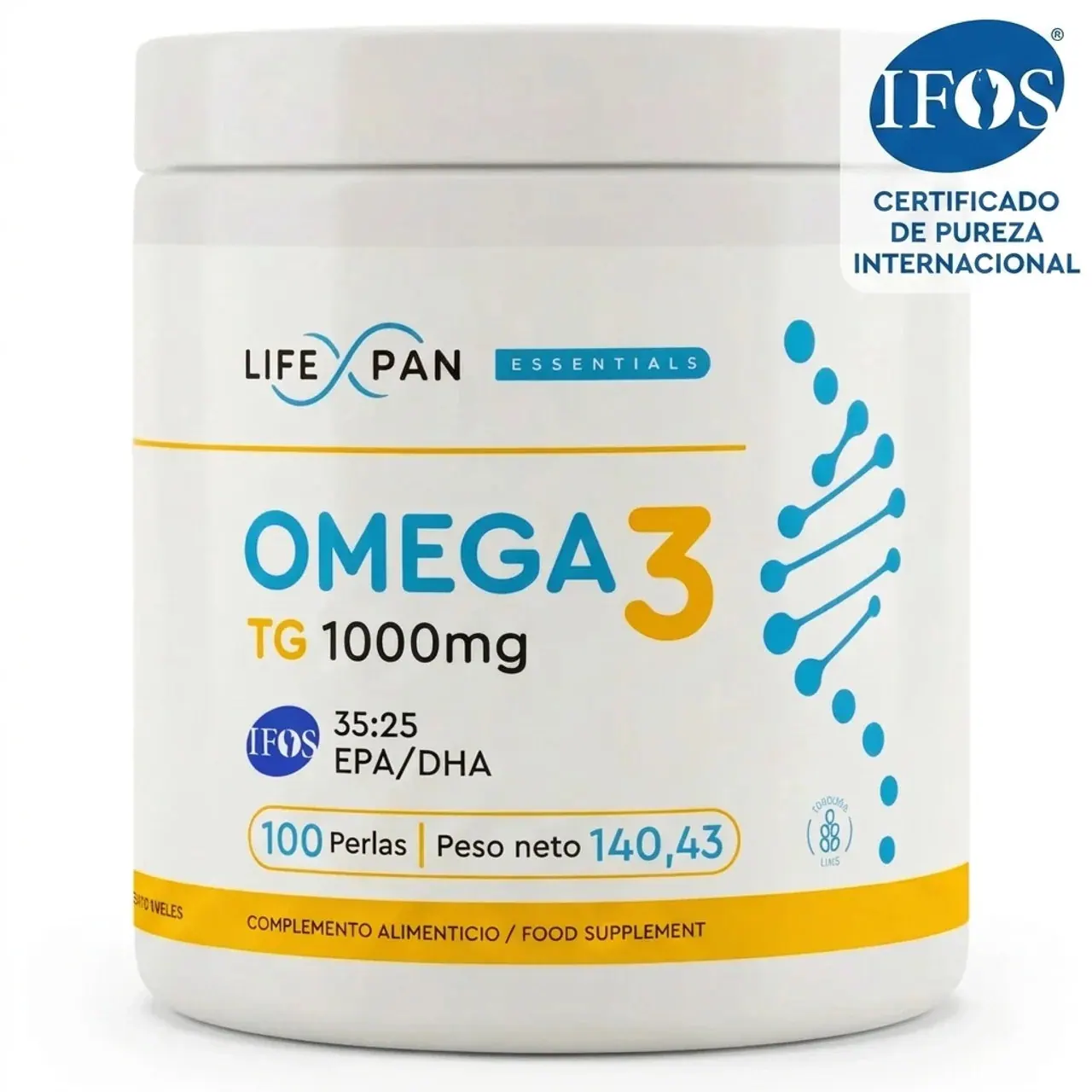
EPA and DHA stated and concentrated: 35% EPA and 25% DHA, with amounts stated transparently. Triglyceride form (TG): the natural form, with maximum bioavailability. Protection against oxidation: enriched with natural vitamin E. IFOS certification: the reference seal that independently verifies purity, content and freshness. Quality source: Peruvian anchovy oil, sustainably caught, one of the most concentrated sources of omega 3 there is.
We're not saying this to convince you it's the only good one out there — we're saying it so you can see that a quality omega 3 isn't a matter of marketing, but of meeting verifiable criteria. Now that you know what they are, you can judge any product in front of you for yourself.
🐟 LifeXpan® IFOS® Ultra Pure Omega 3
Peruvian anchovy oil, IFOS® certified, with 35% EPA and 25% DHA in highly bioavailable triglyceride form and natural vitamin E as an antioxidant. Purity, concentration and freshness independently verified.
Scientific references
Dyerberg, J. et al. (2010). Bioavailability of marine n-3 fatty acid formulations. Prostaglandins, Leukotrienes and Essential Fatty Acids, 83(3), 137–141.
GOED (2024). Voluntary Monograph: standards for EPA and DHA omega-3 products. Global Organization for EPA and DHA Omega-3s.
Albert, B.B. et al. (2015). Fish oil supplements in New Zealand are highly oxidised and do not meet label content of n-3 PUFA. Scientific Reports, 5, 7928.
NIH Office of Dietary Supplements (2024). Omega-3 Fatty Acids: Fact Sheet for Health Professionals. ods.od.nih.gov
Ghasemifard, S. et al. (2014). Omega-3 long chain fatty acid bioavailability: a review of evidence and methodological considerations. Progress in Lipid Research, 56, 92–108.
Informational content. Food supplements are not a substitute for a varied and balanced diet. If you take anticoagulants or have any medical condition, consult your healthcare professional before supplementing with omega 3.