
 EUR
 Mexico · MXN
 United States · USD
Measuring ageing: can we slow down the biological clock?
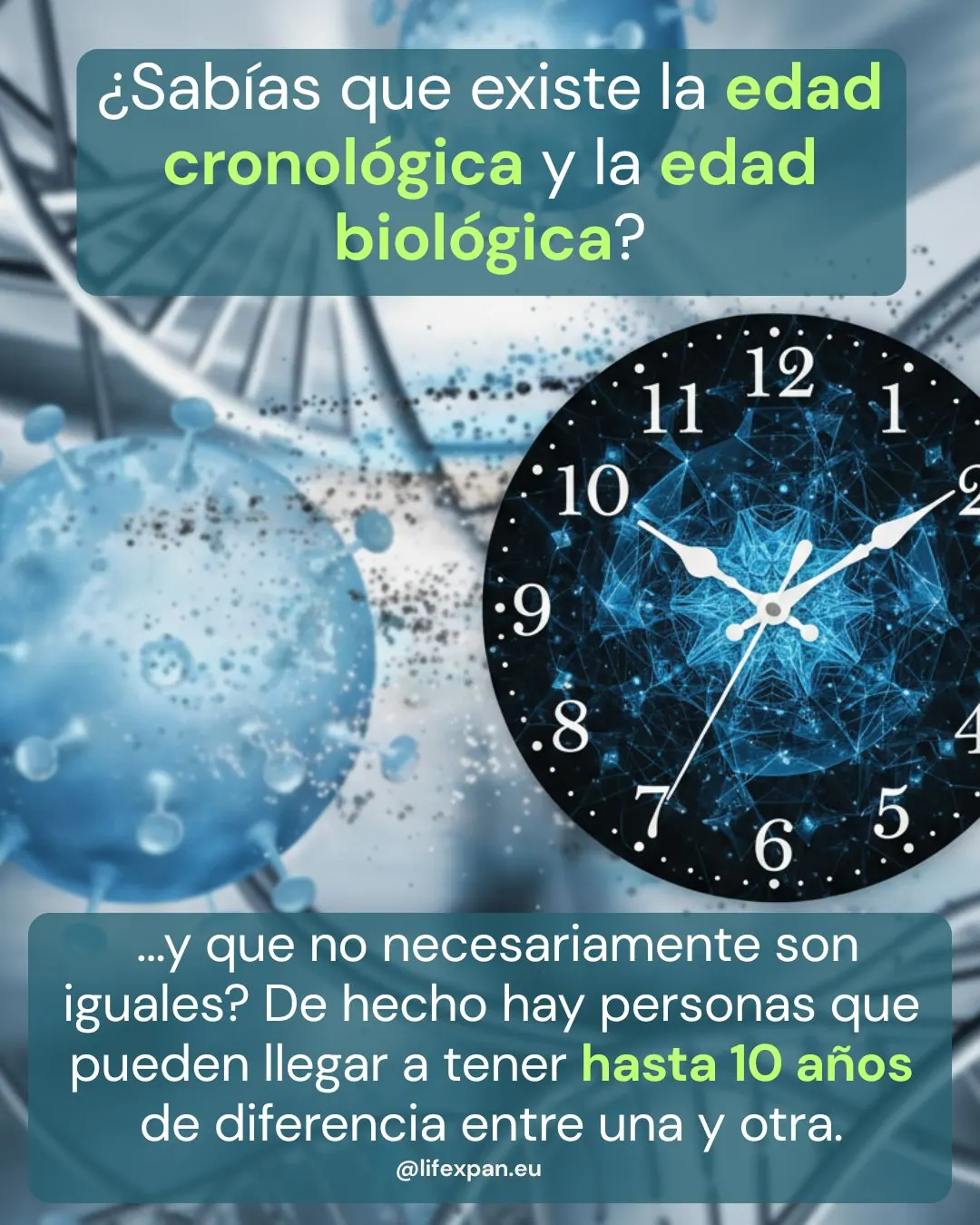
The science of ageing, or geroscience, draws a fundamental distinction between chronological age, which is simply the time elapsed since birth, and biological age (BA).
BA is a functional metric that reflects the body's true state and efficiency, as well as the build-up of molecular damage at cellular level. This metric is crucial, as it has established itself as a stronger predictor than chronological age for disease risk, cognitive decline and all-cause mortality.
Ageing is not the same linear, chronological process for everyone. It's a malleable process, highly susceptible to extrinsic factors such as nutrition, exercise and stress management. The search for precise tools that can objectively quantify the pace of ageing at an individual level is therefore essential for precision medicine within the field of longevity.
Epigenetic Clocks: The Molecular "Fingerprint"
The key molecular mechanism that allows us to track age is epigenetics. Think of DNA as a great book of our body, describing the structure of our genes step by step. As time passes and we're exposed to a poor diet, intense stress, or various other factors, our body adds sticky notes to these pages, which change the way our genes are read, so that some genes get expressed and others don't.
In other words, it changes the way our body reads our DNA. That's what epigenetics is about — the word means "above the genes" — and it's the field that studies hereditary changes caused by gene activation that don't involve any modification to the DNA itself. These aren't mutations, but rather on/off switches that turn certain genes active or inactive.
In this analogy, those sticky notes are what's known as methyl groups, which attach to specific parts of the DNA called CpG sites or islands. This is the process that acts as a molecular switch, regulating gene expression without altering the underlying genetic sequence.
As we age, methylation patterns at thousands of CpG sites change in predictable ways. Epigenetic Clocks are advanced algorithms that read these methylation "fingerprints" to estimate an organism's biological age.

From Horvath to GrimAge: The Evolution of Measurement
The science of measuring ageing has evolved rapidly since its discovery. Initially, the fundamental challenge was to prove that DNA methylation patterns could genuinely track the passage of time with precision. Once that hurdle was overcome, science faced a deeper question: does the epigenetic clock only measure the passing of years, or can it predict an individual's biological fate? This need to move from a simple "time clock" to a "risk predictor" drove the development of multiple generations of algorithms.
The first generation of clocks, established around 2013 with the pioneering Horvath and Hannum models, was revolutionary. These algorithms showed an almost perfect correlation with chronological age, able to estimate a subject's age with great precision from almost any tissue (Horvath) or from blood (Hannum). However, their main limitation was their focus on temporal age: when researchers adjusted the data for chronological age, the resulting metric, known as "age acceleration", showed a weak or inconsistent correlation with disease risk or mortality.
The path towards the second generation focused on creating "phenotypic" or "extrinsic" clocks that measured ageing linked to health rather than to time alone. The goal was no longer to guess someone's age, but to predict the time until functional decline or death. Clocks such as DNAm PhenoAge marked this shift by being trained on direct clinical biomarkers associated with mortality (such as glucose, albumin and cell counts), rather than on age itself. This methodological change dramatically improved their ability to predict morbidity risk.
A key breakthrough within this second generation is GrimAge (short for Grim Reaper Age), designed specifically to capture the accumulation of pathological damage. GrimAge uses DNA methylation not only to calculate an age, but also to estimate levels of plasma proteins and blood markers that are crucial to systemic dysfunction (such as PAI-1 or GDF-15, linked to inflammation and coagulation). This refinement made it the most robust and superior biomarker for predicting mortality and frailty, making it the metric of choice for anti-ageing intervention studies.
Finally, this evolution continues with the emergence of a third generation of clocks, more dynamic and sensitive. These new models focus less on the static prediction of a "biological age" and more on measuring the rate of ageing (the pace at which an individual is currently ageing). Being highly dynamic, they are far more sensitive to lifestyle changes or short-term therapeutic interventions, offering the most refined tool to date for measuring the plasticity of ageing and guiding precision medicine.
But... can we slow down, reverse or halt the biological clock?
The good news is yes, biological ageing can be reversed. Slowing down the epigenetic clock is possible. How? By improving lifestyle habits, which, as science tells us, not only optimise perceived health, but have a measurable impact at the molecular level on DNA methylation.
Dietary interventions that mimic fasting have proven to be powerful modulators of the biological clock. The Fasting Mimicking Diet (FMD), low in calories, sugars and protein, has demonstrated in clinical studies its ability to reduce signs of ageing in the immune system, as well as insulin resistance and liver fat.
Meanwhile, a controlled clinical trial in healthy adult men who followed an 8-week programme combining diet, sleep, exercise, relaxation and nutritional supplements showed an average decrease of 3.23 years in epigenetic age (as measured by the Horvath clock) compared to the control group. This underlines the synergistic power of a holistic approach.
But beyond the pillars of lifestyle (nutrition, exercise and stress mitigation), recent research, especially large-scale controlled clinical trials (2023-2025), has identified the protective efficacy of specific supplements such as Omega-3 and Vitamin D, and has provided solid molecular justification for the use of Nicotinamide Riboside (NR), although the final clock data are still pending.
Vitamin supplements and biological age: Specific evidence on supplements in epigenetic clocks (2023-2025)
The DO-HEALTH study, a large-scale post hoc clinical trial with 777 participants over the age of 70 followed over three years, has provided the clearest evidence yet on the impact of Omega-3 and Vitamin D on second-generation epigenetic clocks such as GrimAge.
Impact of Omega-3 (1 g/day)
Supplementation with Omega-3 alone showed a small protective effect in slowing down the PhenoAge, GrimAge2 and DunedinPACE DNA methylation clocks over the three years of the study.
The slowdown in biological ageing in the Omega-3 group was estimated at around 2.9 to 3.8 months over the 3-year period, with the greatest benefits seen in participants who had lower baseline Omega-3 levels.
This shows that Omega-3 can be recommended as a tool to slow down biological ageing, since high levels of Omega-3 fatty acids have been identified as key biomarkers in studies of extreme longevity.
Omega-3 works by modulating systemic inflammation (a key factor that GrimAge tracks via DNAm logCRP) and contributes to the production of Specialised Pro-Resolving Mediators (SPMs), which promote the active resolution of chronic inflammation.
Impact of Vitamin D (2000 IU/day)
Although Vitamin D alone was not the most powerful factor in this trial, it showed additive benefits when combined with Omega-3 and exercise, particularly for the PhenoAge clock.
Quasi-randomised intervention studies have shown that Vitamin D-deficient participants who began supplementing displayed a 1.3-year reduction in accelerated ageing as measured by the Horvath clock (HorvathAA).
Nicotinamide Riboside (NR)
NR, an NAD precursor, has a very solid mechanistic rationale, but definitive results on large-scale slowing of the epigenetic clock are still pending.
Ageing is associated with a decline in NAD+ levels. NR restores these levels, which is essential for activating Sirtuin (SIRT) and PARP enzymes. These enzymes are crucial for maintaining genomic stability and DNA repair. The accumulation of DNA damage is one of the main explanations for why the epigenetic clock accelerates. By boosting repair, NR could influence methylation patterns.
NR has been shown to modulate DNA methylation at specific loci in muscle and adipose tissue, which correlates with improved mitochondrial biogenesis. This is a genuine biological effect, but it is locus-specific.
Human studies have shown that short-term, high-dose NR supplementation does not alter overall methylation homeostasis.
To date, clinical trials have not provided conclusive, published evidence that NR significantly reduces the AgeAccelGrim score in the general population.18 The lack of a notable overall effect may be due to the short duration of the studies.
Rigorous clinical trials are currently under way (e.g., 2000 mg/day for 52 weeks in frail elderly people) with the primary aim of determining whether NR can slow epigenetic age and improve physical and cognitive function.19 These results will be key to validating NR against the GrimAge metric.
NR has a strong theoretical rationale and is recommended as a fundamental molecular support for cellular metabolism and DNA repair.3
Conclusions
In summary, maintaining a regular exercise routine and a diet that limits inflammation (such as intermittent fasting or calorie-restriction diets) is strongly recommended to slow or halt the epigenetic clock, along with supplementation with Omega-3 and Vitamin D, as evidence from clinical trials (DO-HEALTH) suggests a protective and additive effect in slowing the risk clocks (GrimAge2, PhenoAge), with Omega-3 being the single most influential factor.
Nicotinamide Riboside (NR) is recommended on mechanistic grounds. It acts as an essential support for DNA repair and genomic stability (via the NAD+/SIRTs/PARPs pathway). While the data showing a reduction in GrimAge are still exploratory and preliminary, the molecular rationale is strong.
Sources used
NAD+ metabolism and its roles in cellular processes during ageing.
Nicotinamide Riboside—The Current State of Research and Therapeutic Uses.
DNA methylation GrimAge strongly predicts lifespan and healthspan.
DNA methylation GrimAge version 2
The Role of NAD+ in Regenerative Medicine
What is the fasting-mimicking diet, and how much can it reverse the biological clock?
The Biomarkers in Extreme Longevity: Insights Gained from Metabolomics and Proteomics
If you've decided to supplement your diet and enjoy a healthier lifestyle overall, here are our products, with guaranteed quality:

And only for Black Friday, this amazing OFFER:

anti-envejecimiento cellular anti-ageing biological age biological ageing Epigenetics systemic inflammation longevidad cellular longevity DNA methylation NAD+ nicotinamide riboside nr epigenetic clock metabolic health