
 EUR
 Mexico · MXN
 United States · USD
LifeXpan Optimal: what it adds if you already take vitamin C, D, NR, omega 3 and magnesium
If you're already taking vitamin C, vitamin D with K2, NR, omega 3 and magnesium, you already have a supplementation protocol more solid than 95% of the population. You know the mechanisms, you understand the synergy between molecules and you know why each one is there.
Then someone comes along and asks: so what do you need Optimal for?
It's a completely fair question. And it deserves an honest answer — not a marketing one. Because the answer isn't "you need it for everything". The answer is more precise than that: Optimal covers the nutritional foundation that your longevity supplements assume you already have. And that you probably don't.
🧬 Smart supplementation · 6 min read · Backed by science
The advanced protocol has a blind spot
Longevity supplements — NR, NAC, curcumin, omega 3, collagen — are designed to act on specific biological mechanisms: NAD+ production, autophagy, chronic inflammation, mitochondrial health. They're molecules with a concrete, well-documented mechanism of action.
But all these mechanisms have one thing in common: they need cofactors to work. B vitamins for energy metabolism. Zinc for protein synthesis and immune function. Selenium for the antioxidant activity of glutathione peroxidase. Vitamin E to protect cell membranes from lipid oxidative damage. Iron for oxygen transport to tissues.
Without those cofactors at adequate levels, longevity supplements are working in a nutritionally deficient environment. It's like having a high-performance engine running on low-grade fuel.
💡 In simple terms
NR raises NAD+. But for that NAD+ to be used in the right metabolic reactions, the enzymes that process it need B vitamins as cofactors. Without them, the process is less efficient. The multivitamin doesn't compete with NR — it creates the environment in which NR can do its job.
What your protocol already covers — and what it doesn't
Let's be very precise. If you take vitamin C, D+K2, NR, omega 3 and magnesium bisglycinate, here's what you already have covered in Optimal:
| Nutrient | Already covered? | Note |
|---|---|---|
| Vitamin C | ✓ Covered | The dose in Optimal is moderate — no problematic overlap |
| Vitamin D3 | ✓ Covered | You're taking it with K2 — an advantage over Optimal, which doesn't include K2 |
| Magnesium | ✓ Covered | You're taking bisglycinate — a more bioavailable form than the oxide in Optimal |
| Vitamin B3 (nicotinamide) | ≈ Partially | NR is a NAD+ precursor, not a direct equivalent to the B3 in Optimal |
And here's what Optimal adds to your protocol that you don't currently have:
| Nutrient | What it's for |
|---|---|
| B complex (B1, B2, B5, B6, B9, B12) | Energy metabolism, nervous system, cardiovascular health, neurotransmitter synthesis |
| Vitamin A | Eye health, immune function, mucous membrane integrity |
| Vitamin E | Lipid antioxidant that protects cell membranes — especially mitochondrial ones |
| Zinc | Immunity, protein synthesis, hormone balance, over 300 enzymatic reactions |
| Selenium | Glutathione peroxidase activity, thyroid function, antioxidant defence |
| Iron | Oxygen transport, energy production, cognitive function |
| Iodine, copper, manganese, chromium | Essential enzymatic cofactors for metabolism, thyroid function and blood sugar regulation |
The invisible problem: subclinical deficiency
There's a concept that conventional medicine is slow to recognise but that precision nutrition has been documenting for years: subclinical deficiency. This is the deficiency that doesn't show up on a standard blood test but that does affect metabolic performance — because levels are sufficient to avoid the classic deficiency disease, but insufficient for optimal function.
This is the most common scenario in the Western population with an apparently adequate diet. They eat well, have no obvious symptoms, but their zinc, selenium or B-vitamin levels sit at the lower end of the normal range. And within that range, the enzymes that depend on these cofactors are running at half capacity.
🔬 Key fact
83% of the Spanish adult population doesn't reach recommended zinc levels, according to SEGO data. Over 30% of the world's population has a zinc deficiency, and around 15% a selenium deficiency. These aren't exotic nutrients — they're essential minerals that the modern diet systematically fails to provide in sufficient amounts.

The B-complex: the great missing piece in longevity protocols
Of all the nutrients that Optimal adds to an advanced protocol, the B-complex is probably the most relevant and the most overlooked. The eight B-group vitamins — B1, B2, B3, B5, B6, B7, B9 and B12 — are directly involved in cellular energy metabolism. They're the cofactors that mitochondria need to convert macronutrients into ATP.
Their deficiency has very concrete consequences. Vitamin B12 deficiency — particularly common from age 50 onwards due to reduced gastric intrinsic factor — shows up as fatigue, cognitive decline and neurological disturbances. B6 deficiency affects serotonin and dopamine synthesis. B9 (folate) deficiency compromises DNA methylation — an epigenetic process directly linked to cellular ageing.
And here's an important detail: the NR you take as a NAD+ precursor doesn't replace the B vitamins. NR acts on a specific metabolic pathway — NAD+ production via the salvage pathway. B vitamins act as cofactors in dozens of different pathways. They're complementary, not equivalent.
Zinc and selenium: the defenders no one mentions
Zinc is involved in over 300 enzymatic reactions. It's a cofactor of superoxide dismutase — one of the body's most important antioxidant enzymes —, regulates immune function, is involved in protein synthesis and plays a direct role in hormonal balance, including testosterone. Chronic deficiency is associated with greater susceptibility to infections, poorer wound healing and progressive cognitive decline.
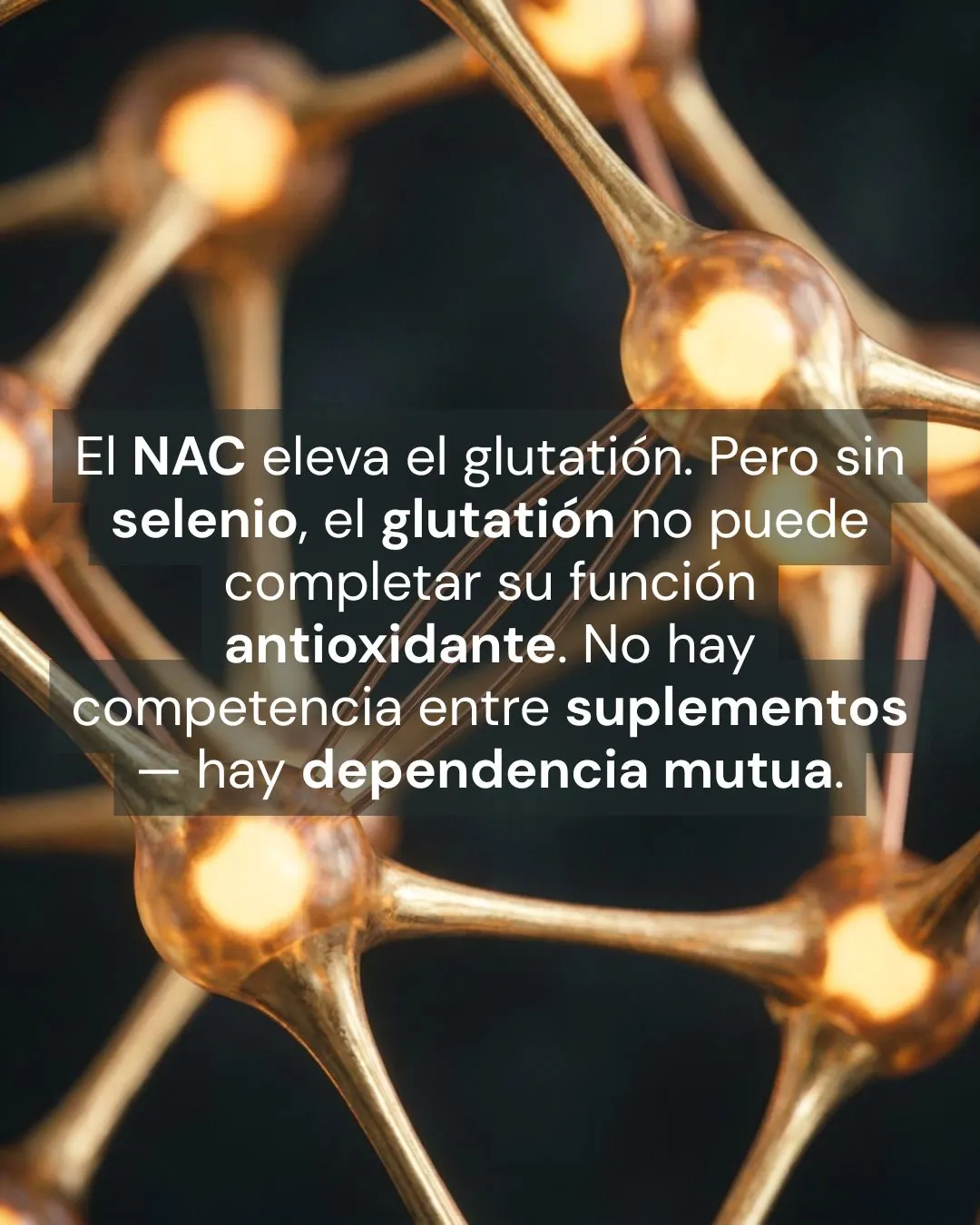
Selenium is the indispensable cofactor of glutathione peroxidase — the enzyme that neutralises lipid peroxides and protects cell membranes from oxidative damage. Without enough selenium, the glutathione that NAC helps produce can't complete its antioxidant function with full efficiency. Once again: this isn't competition, it's mutual dependence.
💡 In simple terms
NAC raises glutathione levels. Glutathione needs selenium to act as an efficient antioxidant. Without enough selenium, the system doesn't run at full capacity even when glutathione is available. Optimal doesn't duplicate NAC — it unlocks its potential.
Is there a risk of taking too much of something?
It's a fair question when combining a multivitamin with individual supplements. The answer, in this specific case, is no — with a few caveats.
The nutrients that overlap between your protocol and Optimal are vitamin C, vitamin D3 and magnesium. In all three cases, Optimal's doses are moderate and fall within safe ranges even when added to your individual supplementation. Vitamin C is water-soluble — any excess is eliminated through urine. Optimal's vitamin D3 is at conservative doses. Optimal's magnesium is oxide — a form with low bioavailability that barely competes with your bisglycinate.
What is worth bearing in mind is that Optimal includes iron. If your iron levels are already in the high range, or you take iron separately, it's a good idea to check with your doctor before adding the multivitamin. Iron is the only micronutrient in this formula where build-up can become an issue if levels are already elevated to begin with.
When it makes most sense to add Optimal to your protocol
If your diet is varied but not perfect. The modern Western diet, even when it's reasonably balanced, tends to cover macronutrients while consistently falling short on micronutrients. Soil depletion, food processing and today's eating patterns have all reduced the nutritional density of what we eat compared with fifty years ago.
If you're over 40. From this age onwards, B12 absorption declines due to reduced intrinsic factor, zinc requirements increase to support immune and hormonal function, and overall micronutrient absorption drops off. Subclinical deficiency becomes more likely, and its effects more noticeable.
If you want to simplify without sacrificing coverage. Taking the B complex, zinc, selenium, vitamin A, vitamin E and trace minerals individually would multiply both the number of supplements and the cost. Optimal brings them all together in a single daily tablet for €12 per pot — the most efficient way to cover your nutritional baseline.
✨ The logic of a complete protocol
Longevity supplements act on specific mechanisms. The multivitamin ensures that the metabolic environment those mechanisms operate in is the best it can be. It's not just another piece of the puzzle — it's the foundation everything else is built on.
Conclusion: it's not redundancy, it's architecture
Taking vitamin C, D+K2, NR, omega 3 and magnesium is a solid protocol. Adding Optimal doesn't duplicate it — it completes it. It covers the micronutrients those supplements need as cofactors, which a modern diet doesn't consistently guarantee.
The B complex, so that energy metabolism can run at full capacity. Zinc and selenium, so that the antioxidant system works efficiently. Vitamin E, to protect the cell membranes everything else is trying to keep healthy. And the trace minerals involved in hundreds of reactions that rarely make the headlines but are essential to how the body functions.
A smart protocol isn't just about choosing the right molecules. It's about making sure they have the right nutritional environment to do their job.
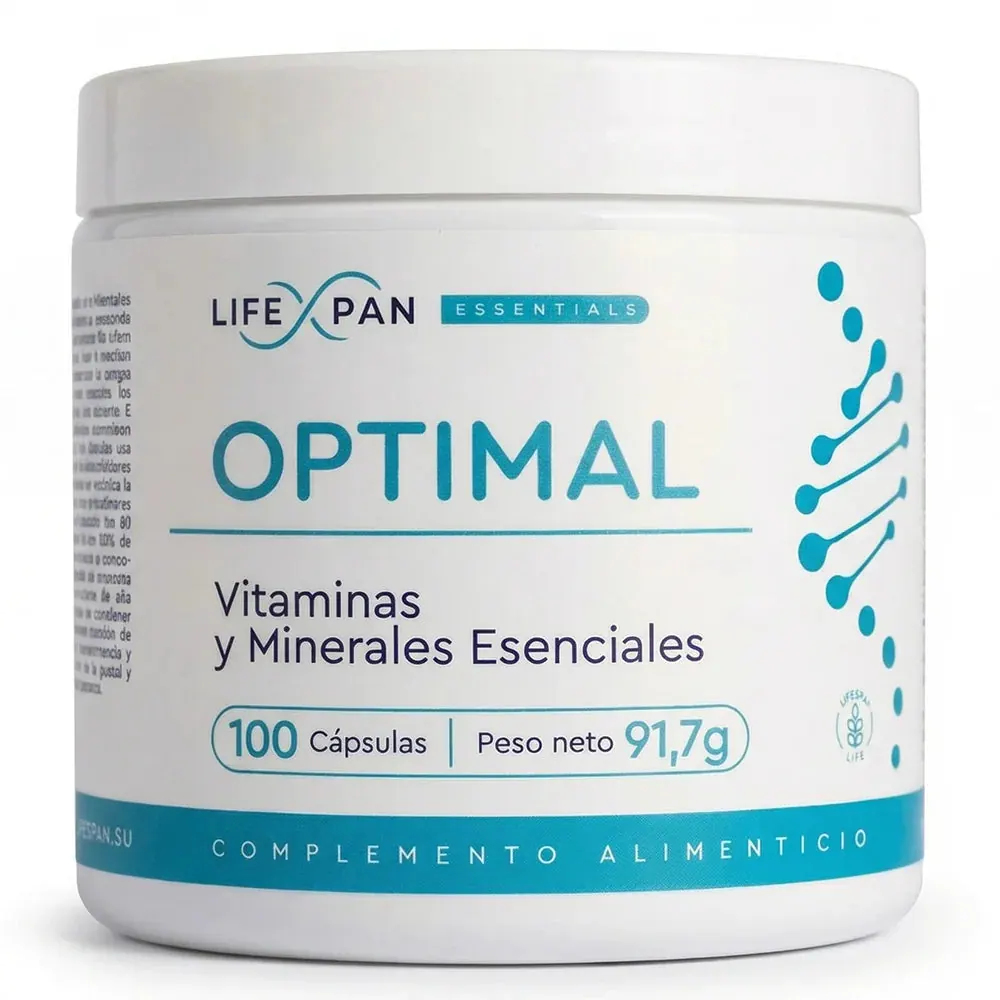
🧬 LifeXpan Essentials Optimal
A complete multivitamin with antioxidants. The nutritional foundation your longevity protocol needs to perform at its best. 100 tablets · 1 a day.
Scientific references
Lankarani-Fard, A. et al. (2025). Reframing micronutrient deficiencies for modern times: a review. Journal of General Internal Medicine. DOI: 10.1007/s11606-025-09481-y
NIH Office of Dietary Supplements (2024). Zinc: fact sheet for health professionals. ods.od.nih.gov
NIH Office of Dietary Supplements (2024). Selenium: fact sheet for health professionals. ods.od.nih.gov
NIH Office of Dietary Supplements (2024). Vitamin B12: fact sheet for health professionals. ods.od.nih.gov
SEGO (2022). Zinc en la dieta: prevalencia de deficiencia en población adulta española. fepadiet.com
Rajman, L. et al. (2018). Therapeutic potential of NAD-boosting molecules. Cell Metabolism, 27(3), 529–547.
enzymatic cofactors B complex longevity difference between a multivitamin and specific supplements micronutrients and ageing advanced multivitamin protocol multivitamin and longevity supplements Optimal LifeXpan benefits what's the point of a multivitamin if I already take supplements which nutrients are missing from the modern diet B vitamins and energy metabolism zinc selenium deficiency zinc and selenium deficiency in the population