
 EUR
 Mexico · MXN
 United States · USD
Why is magnesium so crucial? (and why LifeXpan® Magnesium Bisglycinate is your best choice)

Have you ever wondered why magnesium is so important for your body? This often-underestimated mineral is a true unsung hero, involved in more than 300 vital biochemical reactions. From energy production to bone health and muscle function, magnesium is essential for everything to work perfectly.
But not all magnesium supplements are the same. Today we're going to talk about a specific form that stands out for its high effectiveness: LifeXpan® Magnesium Bisglycinate.
LifeXpan® Magnesium Bisglycinate contains Magnesium Bisglycinate, a form of magnesium renowned for its high bioavailability. Magnesium is an essential mineral that plays a crucial role in more than 300 enzymatic reactions in the human body, making it indispensable for the biochemical functioning of numerous metabolic pathways.
Why is magnesium so crucial?

LifeXpan® Magnesium Bisglycinate, a top-quality product.
Picture your body as an orchestra. Magnesium is the conductor that ensures every instrument (every cell, every process) plays in harmony. It's essential for:
- Energy and Vitality: It's directly involved in the production of ATP, the energy currency of your cells.
- Muscles and Nerves: It's key to muscle contraction and nerve impulse transmission. It helps prevent cramps and supports a balanced nervous system.
- Strong Bones: It contributes to bone mineralisation, working alongside other nutrients to keep your bones dense and resilient.
- Blood Sugar and Blood Pressure Control: It plays a role in regulating blood sugar and maintaining healthy blood pressure.
- Immune Function: It's important for the activation of immune cells, helping your body defend itself.
Proven Clinical Benefits:
Magnesium is a vital cofactor involved in processes such as ATP production (the body's main source of cellular energy), DNA stabilisation, muscle contraction, neuromuscular conduction, glycaemic control, myocardial contraction, and blood pressure regulation. Inadequate magnesium intake can compromise these essential biochemical processes.
There is Level I evidence supporting the use of magnesium in the prevention and treatment of a wide range of common health conditions. These include migraines, metabolic syndrome, diabetes, hyperlipidaemia, asthma, premenstrual syndrome (PMS), pre-eclampsia and various cardiac arrhythmias. Magnesium may also be considered for the prevention of kidney stones and cataract formation, as an adjunct or treatment for depression, and as a therapeutic intervention for many other health-related disorders.
In the field of bone health, magnesium is an important mineral for bone mineralisation and structure. Its role extends to cardiovascular health, where it plays a significant therapeutic and preventive function by regulating blood pressure and myocardial contraction. At the neuromuscular level, it's essential for nerve impulse conduction and muscle contraction. Finally, magnesium is involved in important immune functions, such as macrophage activation, the bactericidal activity of granulocytes and lymphocyte proliferation.
LifeXpan®'s choice of "Magnesium Bisglycinate", noted for its "high bioavailability", is a key factor in its effectiveness. Although other clinical studies show benefits with different forms of magnesium (such as oxide, citrate or chloride), the emphasis on bisglycinate suggests a formulation designed to optimise absorption and use by the body. Greater bioavailability means that a larger proportion of the magnesium consumed reaches the bloodstream and cells, which could translate into more effective results or the ability to achieve the same benefits with potentially lower doses. This highlights that the chemical form of a nutrient can be just as important as the total amount for its impact on health.
The advantage of LifeXpan® Magnesium Bisglycinate
The key to a supplement's effectiveness lies in its bioavailability, that is, the amount of nutrient your body can actually absorb and use. LifeXpan® Magnesium uses a form of magnesium bound to two glycine molecules, which significantly improves its absorption and reduces the digestive discomfort sometimes associated with other forms of magnesium. This means you'll get more benefits from every dose.
Clinically proven benefits
Research has shown that an adequate intake of magnesium can be a great support for a variety of common conditions:
- Migraines: May help reduce the frequency and duration of attacks.
- Premenstrual Syndrome (PMS): Eases symptoms such as fluid retention and general discomfort.
- Insomnia: In older adults, it has been observed to help fall asleep more quickly.
- Depression: May improve symptoms in cases of mild to moderate depression.
- Cardiovascular Health: Contributes to the regulation of blood pressure and the maintenance of a normal heart rhythm.
- Diabetes and Metabolic Syndrome: Plays a role in glucose regulation.
- Asthma: Its role in improving symptoms has been investigated
How much and how should you take it?
The Recommended Daily Allowance (RDA) of magnesium for adults ranges between 310 and 420 mg per day, depending on age and sex. For pregnant women, requirements increase to 350–360 mg per day.
For specific conditions, the studied doses vary:
- For insomnia, doses between 320 and 729 mg per day have been used.
- For depression, improvements have been observed with 248 mg or 305 mg per day.
- In the case of migraines, 500 mg per day (providing 300 mg of elemental magnesium) have proven effective.
It's advisable to spread your daily magnesium intake throughout the day to optimise absorption and avoid possible discomfort.

Important considerations
Although magnesium toxicity is rare, it's important not to exceed 350 mg per day of supplementary magnesium without medical supervision. At very high doses, some side effects may include diarrhoea, nausea and abdominal cramps. In addition, magnesium can interact with certain medications, such as antibiotics and diuretics, so it's always crucial to consult your doctor or pharmacist before starting any supplement.
Your wellbeing, a priority
Magnesium is a fundamental mineral for your overall health. If you're looking for comprehensive support for your energy, muscles, bones and mental wellbeing, the(https://lifexpan.eu) is an excellent choice thanks to its high bioavailability and clinically proven benefits.
Always remember that supplements are a complement to, not a substitute for, a balanced diet and a healthy lifestyle. Make your wellbeing a priority and consult a healthcare professional for personalised guidance!
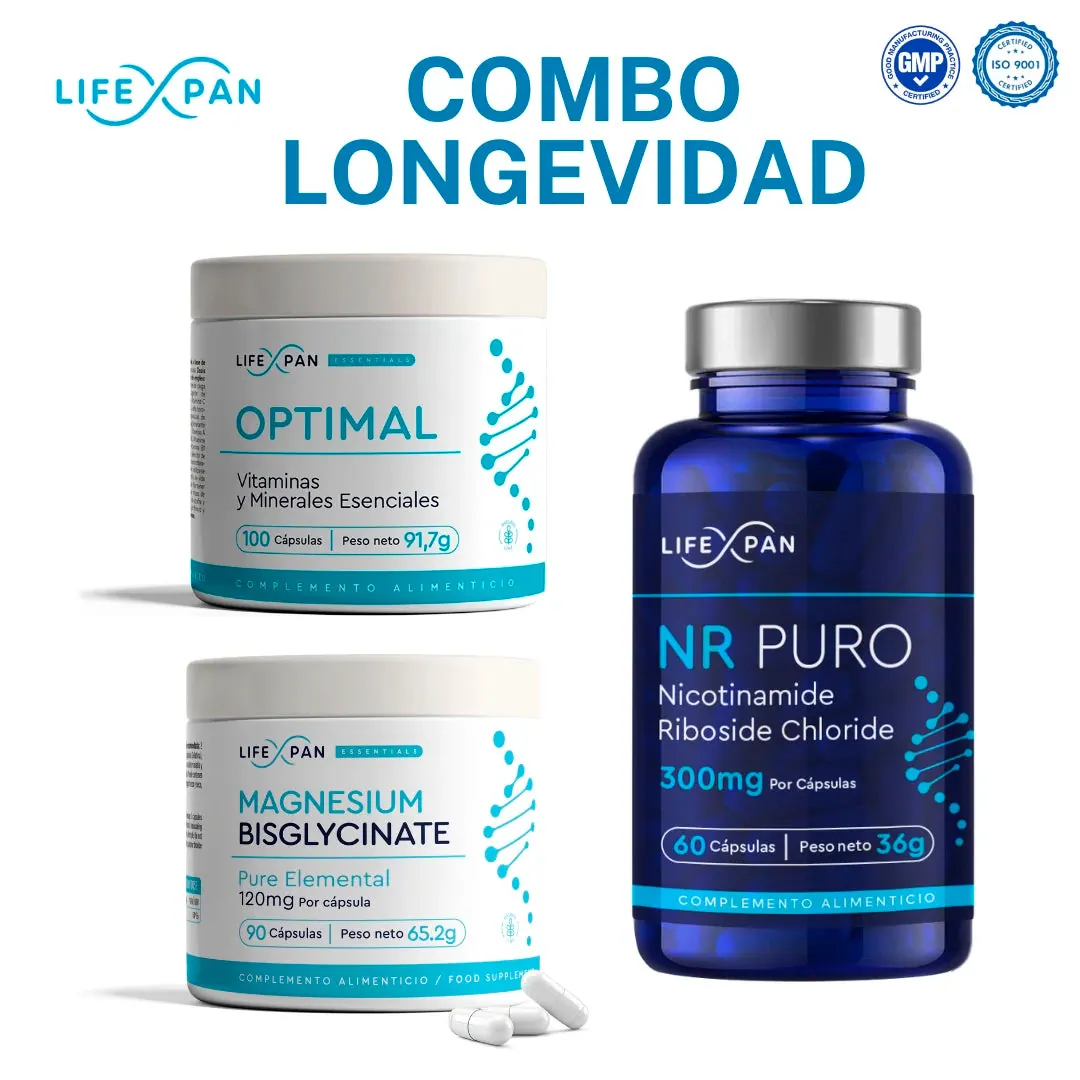
And if you're looking for a pack that can help complete the healthy ageing process, try combining it with LifeXpan® NR PURO, LifeXpan Magnesium and LifeXpan Optimal
Magnesium: How Much Do You Need and When Should You Take It to Maximise Its Benefits?
Magnesium is a fundamental mineral for your health, involved in hundreds of bodily processes. But do you know how much magnesium you really need and what the best time to take it is? Here's a simple explanation.
What Is the Recommended Daily Allowance of Magnesium?
The amount of magnesium your body needs can vary depending on your age and sex. The Recommended Daily Allowances (RDA) established by experts are as follows:
| Age | Men (mg) | Women (mg) |
| 19–30 years | 400 | 310 |
| 31–50 years | 420 | 320 |
| 51+ years | 420 |
320 |
If you're pregnant (and over 18), your needs increase to 350–360 mg per day.
Specific Doses for Certain Conditions (according to studies):
Research has explored higher magnesium doses to address specific health issues:
-
For insomnia in older adults: Doses between 320 and 729 mg per day have been used to help fall asleep more quickly.
-
For mild to moderate depression: Some studies have shown improvements with doses of 248 mg or 305 mg per day.
-
For Premenstrual Syndrome (PMS): Doses of 200 mg per day have helped with fluid retention, and 250 mg per day combined with vitamin B6 have relieved general PMS symptoms.
-
For migraines: A dose of 500 mg per day (equivalent to 300 mg of elemental magnesium) has proven effective in reducing the frequency and duration of attacks.
What's the Best Time to Take Magnesium?
To optimise absorption and avoid possible digestive discomfort, such as diarrhoea or abdominal cramps, it's best to spread your daily magnesium intake throughout the day rather than taking one large dose.
For example, if your recommended dose is 400 mg, you could take 200 mg in the morning and 200 mg in the evening.
Key Points to Remember:
-
Don't exceed the dose without supervision: Although magnesium toxicity is rare, it's advisable not to exceed 350 mg per day of supplemental magnesium without the guidance of a medical professional.
-
Possible interactions: Magnesium can interact with certain medications (such as antibiotics and diuretics). If you're taking any medication or have pre-existing health conditions, always consult your doctor or pharmacist before starting any supplement.
Magnesium is a cornerstone of your overall wellbeing. Knowing the right doses and how to take it will help you get the most out of its benefits.
Bibliography
PMC. (2017).
Magnesium is an essential element required as a cofactor for over 300 enzymatic reactions and is thus necessary for the biochemical functioning of numerous metabolic pathways. Retrieved from https://pmc.ncbi.nlm.nih.gov/articles/PMC5637834/
PMC. (2018).
Magnesium (Mg2+) has several functions in the human body. It acts as a cofactor for more than 300 enzymes, regulating a number of fundamental functions such as muscle contraction, neuromuscular conduction, glycemic control, myocardial contraction, and blood pressure. Retrieved from https://pmc.ncbi.nlm.nih.gov/articles/PMC5926493/
Healthline. (n.d.).
The maximum recommended daily dose of magnesium for adults is 420 mg for males and 350 mg for females. Retrieved from https://www.healthline.com/nutrition/magnesium-dosage
Important Note: Disclaimer Food supplements are designed to complement, not replace, a balanced diet, a healthy lifestyle or professional medical advice. It is strongly recommended to always consult a qualified healthcare professional before starting any new supplement regime, especially if you have pre-existing health conditions, are pregnant or breastfeeding, or are taking other medications concurrently. This report provides general scientific information and should not be considered a substitute for personalised medical guidance.
pain relief magnesium bisglycinate ejercicio magnesio