
 EUR
 Mexico · MXN
 United States · USD
NR vs NMN Part III: Forgotten clinical studies | Research article
This article continues on from NR vs NMN Parts I-III: The silent duel in anti-ageing | (lifexpan.eu)
The evidence gathered paints a nuanced picture of the role of NAD⁺/NR in longevity. On one hand, there is a solid biological rationale: NAD⁺ is a central cofactor whose decline with age appears to contribute to cellular deterioration; replenishing NAD⁺ activates pro-longevity pathways (sirtuins, DNA repair, autophagy) similar to those triggered by calorie restriction . NR, as a vitamin precursor, does indeed manage to raise NAD⁺ levels in human tissues, something demonstrated repeatedly. Moreover, the most consistent results from the studies – such as the reduction in systemic inflammation – align with current theories of ageing, where “low-grade chronic inflammation” (“inflammaging”) is a risk factor for multiple diseases. In clinical trials, NR supplementation has been shown to lower pro-inflammatory cytokines (IL-6, IL-8, TNF-α) and modulate insulin metabolic pathways , suggesting a subtle geroprotective effect: it could help maintain a more “youthful” biochemical profile in older individuals.
Likewise, certain functional outcomes in humans offer grounds for optimism. For example, improving exercise capacity in patients with peripheral artery disease (an aspect of healthspan, or healthy lifespan) is clinically relevant – it potentially implies greater independence and reduced disability in older adults . The improvement observed with NR in this population, though modest, is notable given that few therapies manage to increase exercise tolerance in PAD. Similarly, in COPD patients, reducing lung inflammation could translate into fewer exacerbations and a slower decline in respiratory function . These are specific benefits which, if confirmed in larger studies, would position NR as a valuable adjunct in geriatric medicine, rather than as a general anti-ageing supplement for the wider population.
On the other hand, the findings force us to acknowledge some important limitations.
Firstly, no human trial has yet shown that NR effectively prevents age-related diseases (e.g. heart attacks, dementia) or extends lifespan. Many studies measure intermediate markers (blood biomarkers, short-term functional measures) rather than hard clinical endpoints. Even the effects observed – for example, an improved inflammatory or lipid profile – tend to be relatively small in magnitude. This is consistent with the assessment by Damgaard & Treebak (2023): currently, the evidence for tangible benefits in humans is weak or preliminary . Furthermore, several well-controlled studies found no improvements in critical metabolic parameters: for instance, neither insulin sensitivity nor muscle mitochondrial function changed significantly after weeks of NR supplementation in overweight adults . This suggests that, outside of states of deficiency or stress, raising NAD⁺ may not substantially alter homeostasis in healthy middle-aged people. This is why some scientists describe NR more as an “energising vitamin” than as a genuine anti-ageing therapy – useful for correcting low NAD⁺ states (ageing, illness, chronic fatigue) but with no added effect when NAD⁺ is already sufficient.
A second consideration is the possibility of unwanted effects or risks.
The study by Goun et al. warns that indiscriminately boosting cellular metabolism could be harmful in the presence of pre-malignant or malignant cells . This finding aligns with a basic principle of biogerontology: pro-youth interventions could also accelerate pathological processes if those processes (such as cancer) benefit from the same metabolic pathways. Fortunately, there is so far no indication that moderate NR supplementation increases cancer incidence in humans, but it will be important to assess long-term safety, especially in individuals with a family history of cancer or pre-cancerous lesions. Similarly, given that NAD⁺ is involved in immune response (via enzymes such as CD38, SARM1, etc.), its sustained elevation could have unforeseen effects on immunosenescence or autoimmunity – areas that require further research.
Another topic under discussion is the comparison with other NAD⁺ precursors.
NR competes, so to speak, with NMN (nicotinamide mononucleotide) and niacin as ways of raising NAD⁺. Some research suggests that NMN might raise NAD⁺ more directly in certain tissues (being a step closer than NR in the salvage pathway). In fact, Japan recently approved NMN as an anti-ageing functional food, while in the US, curiously, the FDA blocked its sale as a supplement (as it's under pharmaceutical study), leaving NR as the available legal option. To date, results in longevity models for NMN and NR are similar, and both molecules appear to converge on comparable effects once ultimately converted into NAD⁺. However, NMN may face direct intestinal absorption difficulties, depending partly on its conversion to NR to enter cells. Therefore, the choice between NR or NMN as a supplement is still being assessed; future comparative trials may clarify whether one has advantages over the other in efficacy or safety.
New study shows promising results for COPD treatment | ScienceDaily
Regarding current and future clinical applications, NR is already being tested in various age-related conditions. For example, it's being investigated in early Alzheimer's and mild cognitive impairment (hoping to improve brain metabolism), in Parkinson's and other neurodegenerative diseases (for its neuroprotective effects seen in animal models), in heart failure (to boost myocardial energy metabolism), and in chronic fatigue syndrome or frailty in the elderly (aiming to increase perceived energy levels). Its combination with other nutraceuticals is also being evaluated: NR alongside resveratrol (a sirtuin-activating polyphenol) or with quercetin (a mild senolytic) to see whether there are synergies in improving health in old age. A particularly interesting area is the use of NR in acute tissue damage situations: a study in patients with acute kidney injury assessed NR + pterostilbene over a few days, finding signs of improvement in kidney markers with no adverse effects. This suggests that, beyond longevity, NAD⁺ might support resilience against injury or stress (helping cells repair damage more quickly). Nonetheless, all these clinical possibilities require validation in larger controlled trials.
Finally, it's worth highlighting the technological progress around NR: improving its stability and bioavailability. Pure NR is chemically unstable (its glycosidic bond can break down easily), which posed challenges for manufacturing and storage. The introduction of formulations such as borate-stabilised NR (NR borate) – which prevents degradation until the point of consumption – is an advance that ensures the doses taken contain the active compound intact. Although the borate dissociates quickly in the body and the resulting NR acts just like the conventional form, this innovation could lead to more reliable and effective supplements. As these pharmaceutical aspects are optimised and costs come down, we may well see NR included in preventive public health strategies for the ageing population (for example, as part of nutritional supplements for older adults, alongside vitamin D, B12, etc., should the evidence of benefits grow stronger).
The current discussion on NAD⁺/NR and longevity
In summary, the current discussion on NAD⁺/NR and longevity reflects a balance between expectation and uncertainty. There's no doubt that NAD⁺ is crucial to the biology of ageing and that replenishing it brings certain improvements at the cellular level and in disease models. However, translating that into additional years of healthy life is a bigger challenge than initially thought. NR shouldn't be seen as a substitute for proven habits (diet, exercise, managing risk factors) but potentially as a complement within a multidimensional approach to healthy ageing. Future research will reveal just how far its contribution can go, whether small (improving some aspect of quality of life) or broader (delaying the onset of several conditions at once). For now, the scientific community remains cautiously optimistic: continuing studies while communicating to the public that, while NAD⁺ "boosters" are promising, there's no magic shortcut against ageing, and any intervention must be rigorously assessed for its real benefits and risks.
Conclusions we draw
The scientific exploration of nicotinamide riboside (NR) as a tool for promoting longevity has produced mixed but informative results. On the plus side, it's confirmed that we can safely raise cellular NAD⁺ levels in humans, which opens the door to modulating ageing processes at the level of fundamental biochemistry. Recent studies have shown improvements in health markers among ageing populations – from reduced lung inflammation and better exercise capacity, to favourable changes in brain biomarkers linked to Alzheimer's . These findings support the idea that maintaining NAD⁺ homeostasis could help slow certain aspects of age-related decline, contributing to a healthier healthspan.
However, the evidence to date doesn't guarantee miracles: NR has not extended maximum lifespan in laboratory organisms, nor has it yet been shown to prevent age-related diseases in long-term clinical trials . Its beneficial effects, though real, seem for now to be limited to modest improvements in weakened metabolisms or inflammatory states, rather than reversing ageing itself. Furthermore, important nuances around safety and context are emerging – raising NAD⁺ could be counterproductive in the presence of active malignant cells, for instance , reminding us that even "natural" interventions must be evaluated with the same rigour as a drug.
Source- Over-the-counter supplement improves walking for peripheral artery disease patients | ScienceDaily
In conclusion, NR represents one of the interesting frontiers in longevity science: a metabolic modulator with a solid physiological basis and early signs of usefulness in humans, but one that doesn't operate in a vacuum or in an all-powerful way. It will likely find its optimal niche as part of comprehensive health strategies (e.g., in older, frail populations or in combination with other geroprotective therapies). Larger, longer-duration clinical trials are still needed to clearly determine who benefits most from NR supplementation, what the optimal doses are, and whether there are cumulative long-term effects (good or bad). Likewise, close monitoring of safety markers will remain crucial as more people use these supplements in real life.
At today's crossroads between promise and caution, the message is twofold: keep informed enthusiasm alive – continuing research and innovation in NAD⁺/NR given its potential – while also managing expectations – honestly communicating what science supports and what remains unknown. In this way, we'll move towards evidence-based interventions that genuinely help people age with greater health and vitality, the ultimate goal of longevity medicine.
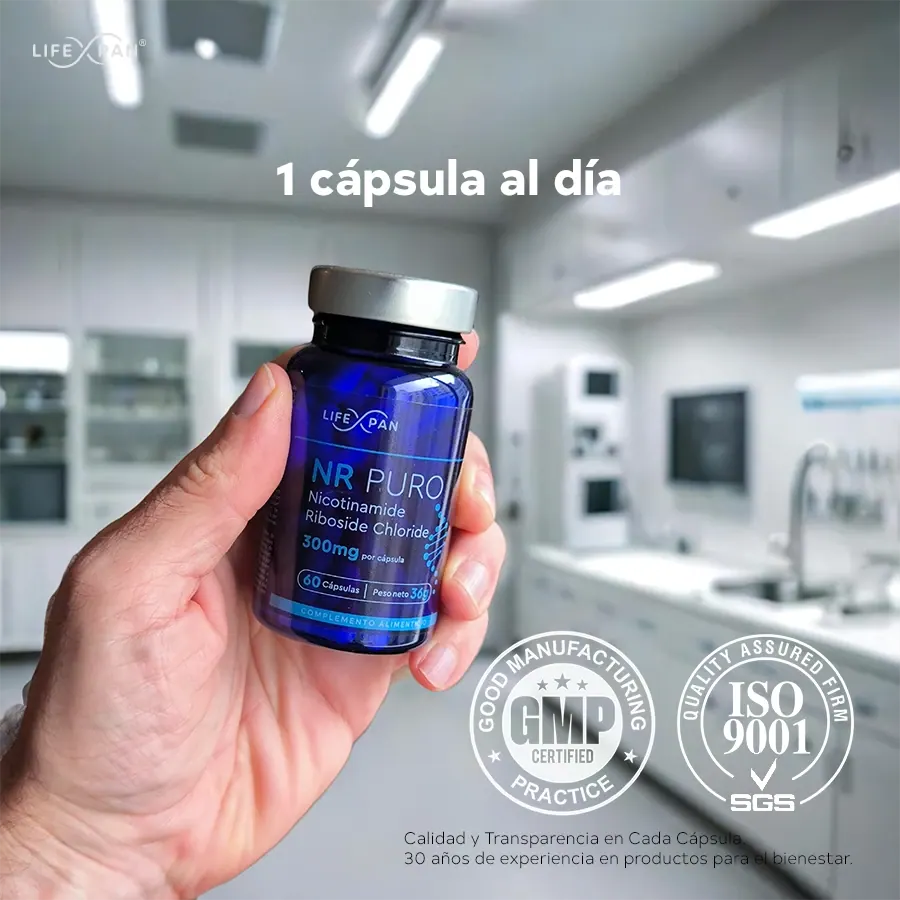
If you're looking for pure NR...
anti-envejecimiento nmn nr