
 EUR
 Mexico · MXN
 United States · USD
Why coffee gives you a boost and Q10 doesn't (and why that's a good thing)

You drink a coffee and within twenty minutes you feel better. You take a coenzyme Q10 capsule and, if you're honest, you feel nothing — not that day, nor the next. It's tempting to conclude that coffee "works" and Q10 doesn't. But that conclusion comes from comparing two things that don't do the same job. Understanding the difference — what exactly happens in your body with each one — completely changes how you should judge them.
☕ Cellular energy & Everyday science · 6 min read · Informational content
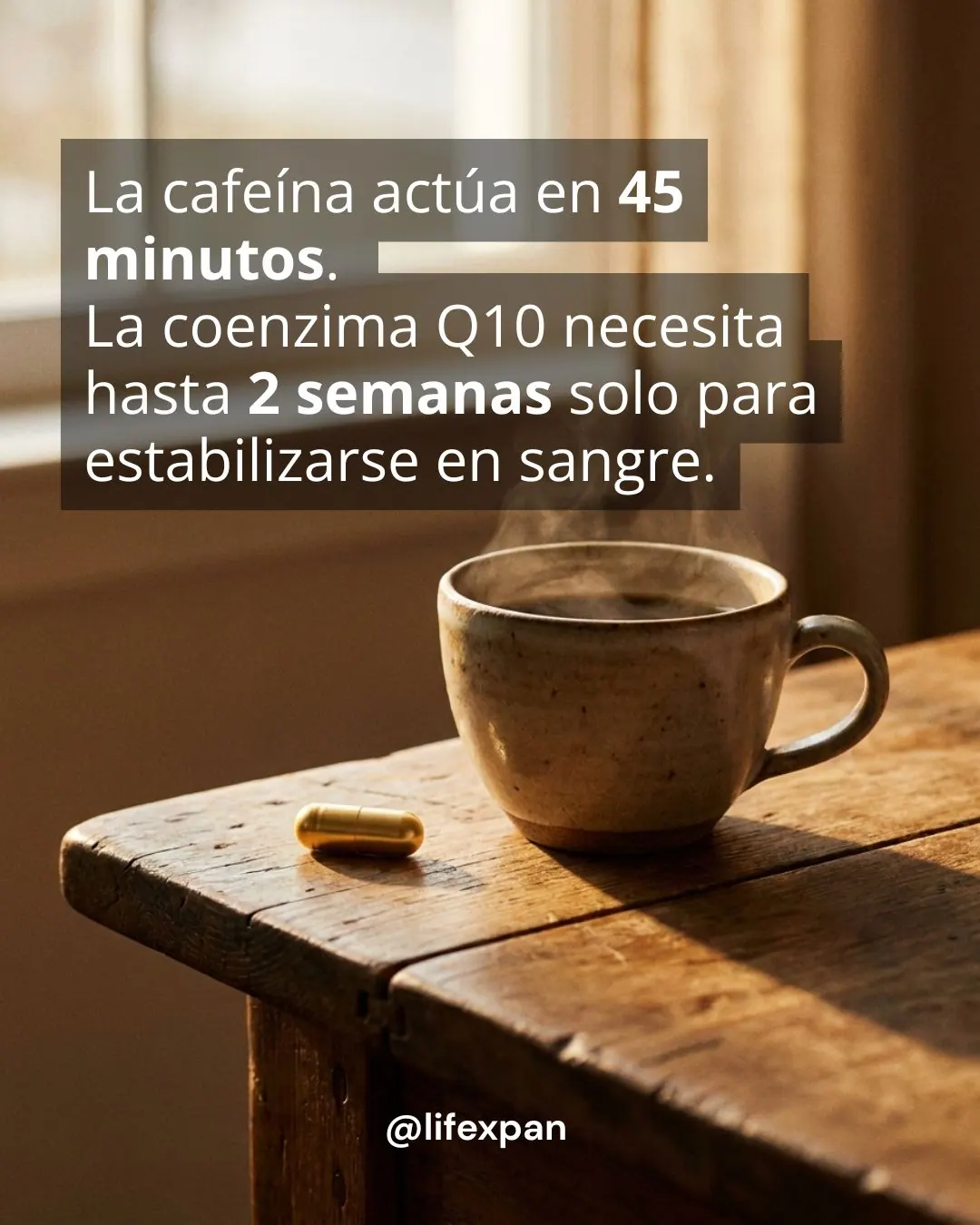
What coffee actually does: hiding the signal, not creating energy
To understand coffee's boost, you need to meet a little-known player: adenosine. It's a molecule produced as a natural by-product when your cells use up ATP — the energy they run on. The more you think, move, or simply stay awake, the more adenosine builds up in your brain. That build-up is, quite literally, the chemical signal for "I need to rest": it binds to receptors called A1 and A2A and slows down neural activity, producing the feeling of sleepiness and fatigue.
Caffeine has a molecular structure similar enough to adenosine's that it fits into those very same receptors without activating them. In other words: it occupies the space but doesn't deliver the message. The result is that the "you're tired" signal gets blocked, even though the underlying cause — the real energy expenditure — is still there, unresolved.
💡 In simple terms
Imagine tiredness is an alarm going off in your brain. Coffee doesn't put out the fire that triggered it — it takes the batteries out of the smoke detector. That's why the effect is so fast: it doesn't have to manufacture anything, it just has to cover up a signal that already existed.
Why the effect drops off so suddenly
This is where the infamous "crash" comes from. While caffeine occupies the receptors, real adenosine keeps building up in the background, unable to bind to them. When caffeine's effect wears off — usually a few hours later — all the receptors become free at once, and that accumulated adenosine binds to them all in one go. The result is a wave of tiredness that hits harder than if you'd never had coffee at all: it's not that coffee "causes" more tiredness, it's that it had been masking the tiredness you already had, which now shows up all at once.
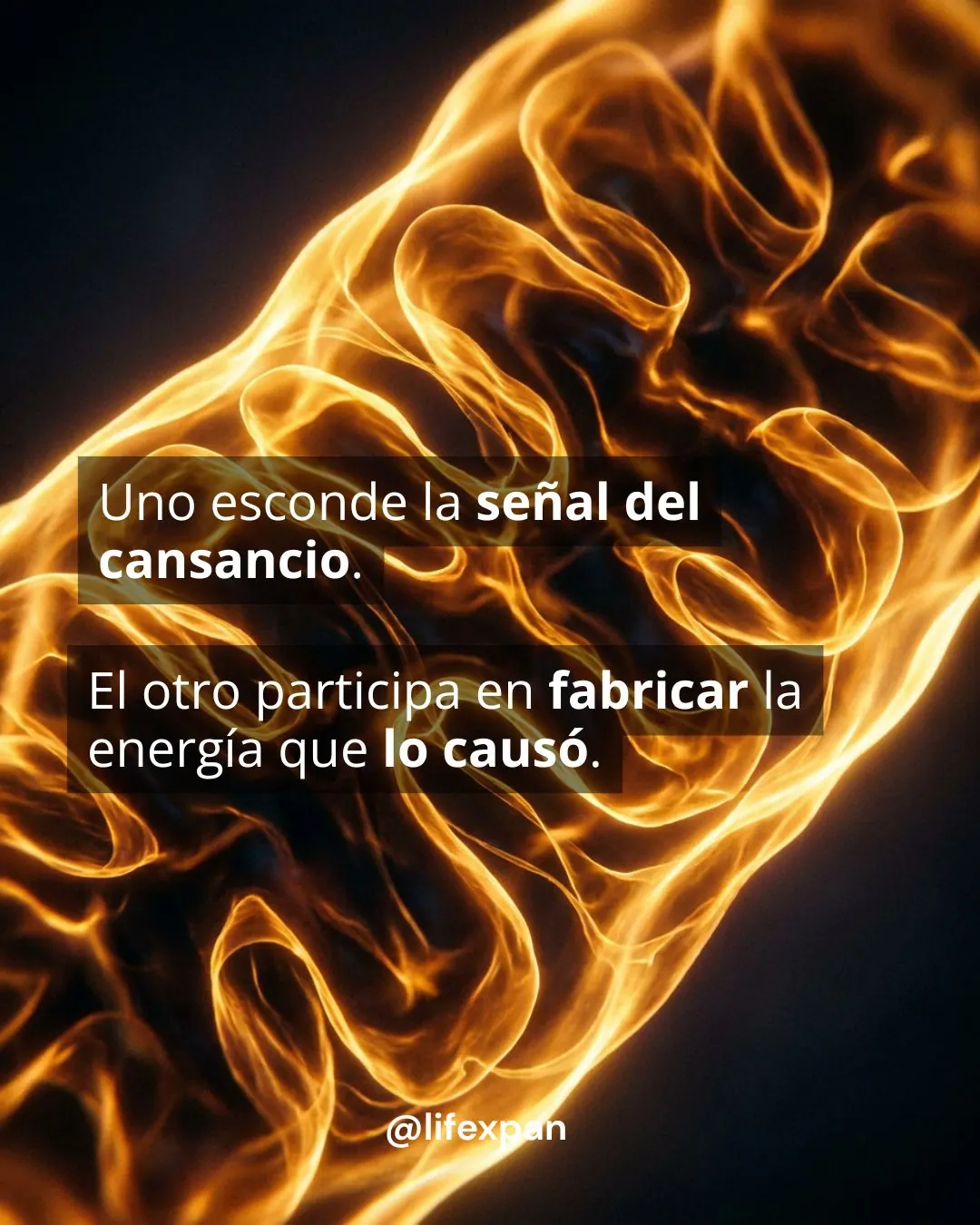
What coenzyme Q10 does: not covering the signal, but helping to generate the energy
Coenzyme Q10 works in a completely different place: it doesn't act on the brain receptors that perceive tiredness, but on the mitochondrial machinery that produces ATP. It's a component of the electron transport chain, the process by which the cell converts what you eat and the oxygen you breathe into the energy it uses for everything.
This explains the two key differences compared with coffee. First: there's nothing to "feel" immediately, because it isn't blocking any signal — it's taking part in a background metabolic process that isn't experienced as a sudden rush. Second: it doesn't cause a crash, because it hasn't been hiding anything that needs to show up later. If anything, what it does is support that background process — real energy production — so it runs more efficiently over time.
🔬 Key fact
Coffee acts on the perception of tiredness within minutes. Coenzyme Q10 acts on energy production, a process that builds up over weeks of consistent use. They aren't comparable in speed because they aren't solving the same problem.
So, which one is better?
Neither replaces the other, because they're not competing for the same job.
Coffee has its place: it's useful for a quick boost now and then, a demanding afternoon, an early start. Its limitation is that, used as a constant daily strategy, it builds up an adenosine debt that the body eventually calls in — hence the tolerance, which means you need more and more for the same effect.
Coenzyme Q10 doesn't offer that immediate lift, and anyone taking it expecting to feel "something" straight away will be disappointed — not because it doesn't work, but because that's not what it's designed to do. Its territory is different: to steadily support, over time, your cells' underlying capacity to produce energy — without borrowing from tomorrow's supply.
✨ The key idea
One borrows. The other builds. Coffee and Q10 follow entirely different logics — and confusing them is why so many people give up on a cellular energy supplement thinking it "does nothing", when in fact it never promised to do what coffee does.
How CavaQ10® fits into this logic
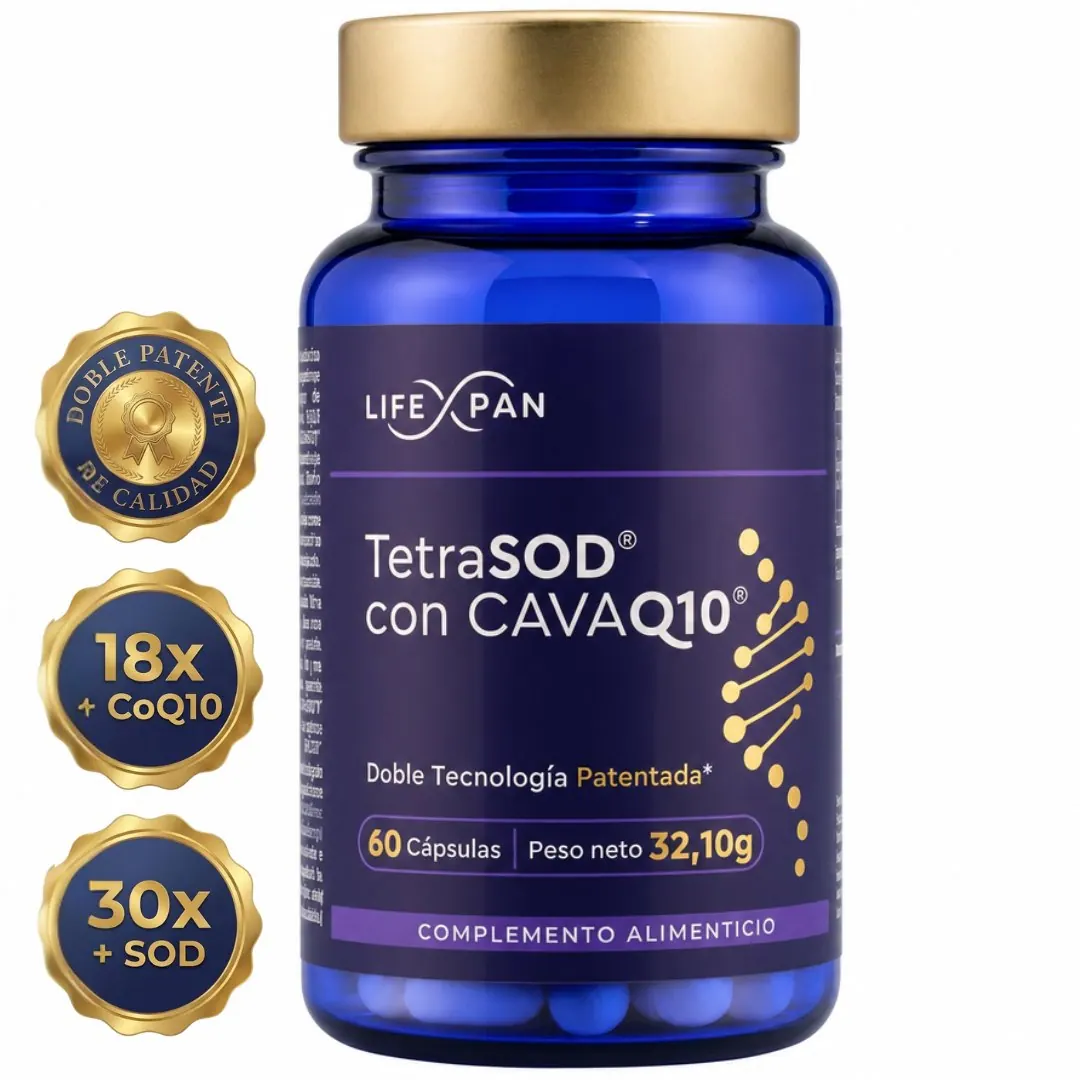
If you decide to support your baseline cellular energy, it's worth choosing a form of coenzyme Q10 that's well absorbed. CavaQ10® is the first water-soluble coenzyme Q10 — thanks to gamma-cyclodextrin technology, it's absorbed without relying on dietary fat and reaches up to around 18 times the bioavailability of a conventional CoQ10. Take it on an empty stomach, with a glass of water, alongside Pure NR in the morning — a simple habit designed to be kept up over time, which is exactly what this kind of support needs.
⚠️ An important note
If you take medication regularly or have any medical condition, consult your healthcare professional before supplementing. Food supplements are not a substitute for a varied and balanced diet and a healthy lifestyle.
Conclusion
Next time you compare your morning coffee with your coenzyme Q10 capsule, remember you're not comparing two energisers in the same category. One silences an alarm. The other takes part in the engine that set it off. And only by understanding that difference can each be judged for what it truly does.
⚡ CavaQ10® + TetraSOD® by LifeXpan®
The first water-soluble coenzyme Q10: up to ~18× more bioavailable, taken on an empty stomach, with TetraSOD® for cellular antioxidant defence. Real energy, at the cellular level.
Scientific references
Fredholm, B.B. et al. (2001). International Union of Pharmacology. XXV. Nomenclature and classification of adenosine receptors. Pharmacological Reviews, 53(4), 527–552.
Ribeiro, J.A. & Sebastião, A.M. (2010). Caffeine and adenosine. Journal of Alzheimer's Disease, 20(s1).
Bhagavan, H.N. & Chopra, R.K. (2006). Coenzyme Q10: absorption, tissue uptake, metabolism and pharmacokinetics. Free Radical Research, 40(5), 445–453.
Hernández-Camacho, J.D. et al. (2018). Coenzyme Q10 Supplementation in Aging and Disease. Frontiers in Physiology, 9, 44.
Nehlig, A. (2018). Interindividual Differences in Caffeine Metabolism and Factors Driving Caffeine Consumption. Pharmacological Reviews, 70(2), 384–411.
Informational content. This does not constitute an authorised health claim. Food supplements are not a substitute for a varied and balanced diet.
adenosine receptors alternatives to coffee for energy A1 A2A receptor blocking coenzyme Q10 vs caffeine how adenosine causes tiredness how caffeine works in the brain energy crash sleep debt difference between caffeine and coenzyme Q10 difference between borrowed energy and real energy real energy vs stimulants why coffee gives you a quick energy boost why coffee makes me crash afterwards why coffee's effect wears off mitochondrial ATP production what's better for energy, caffeine or coenzyme Q10 caffeine tolerance