
 EUR
 Mexico · MXN
 United States · USD
What happens to your energy during menopause, and how to get through it
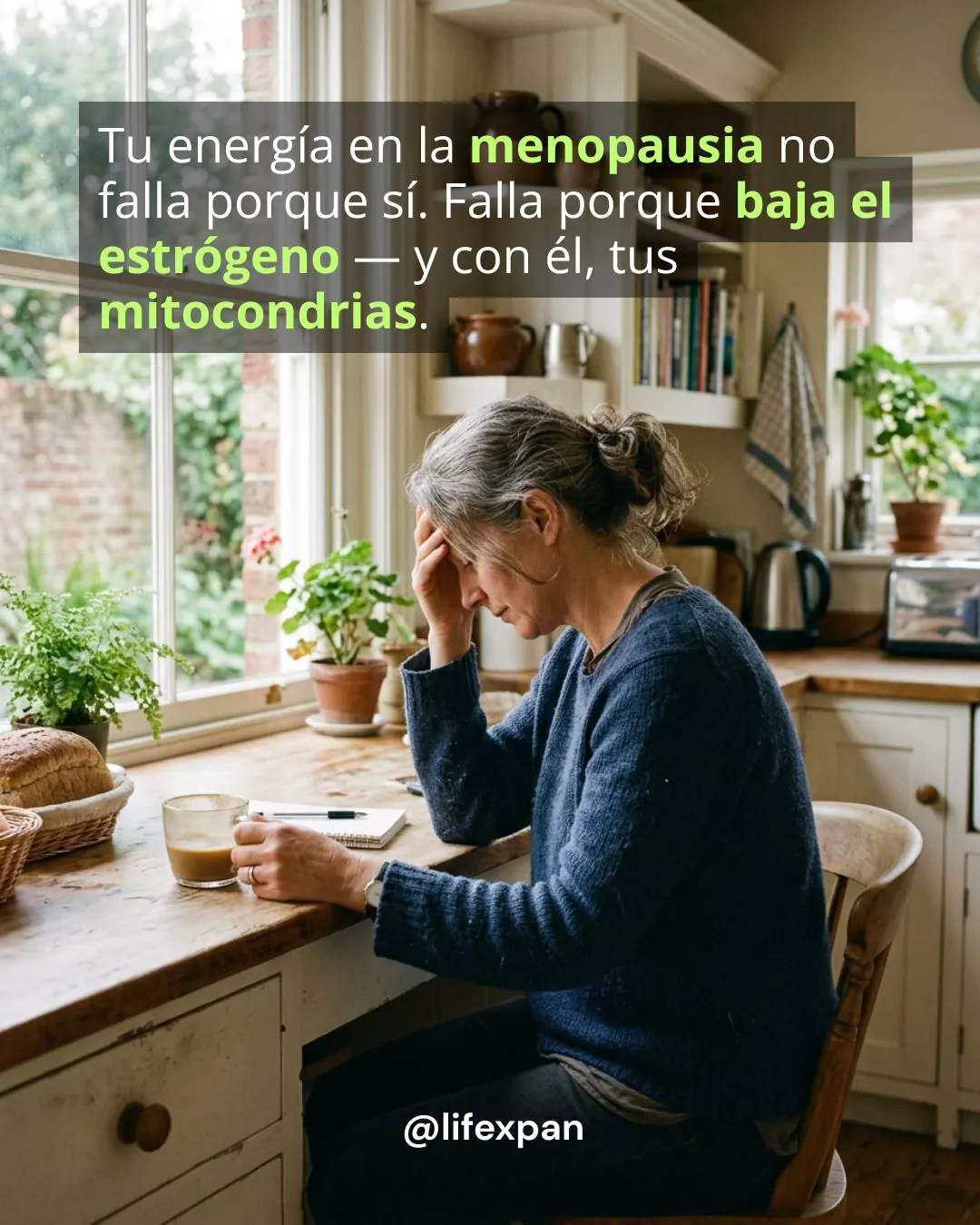
"It's your age." That's the explanation most commonly offered when a woman going through perimenopause or menopause says she's exhausted in a way she's never felt before. It's not just tiredness: it's a lack of energy that more sleep doesn't fix, and it's often accompanied by brain fog, changes in weight, and a sense that the body simply doesn't respond the way it used to.
The real explanation is more precise than "your age" — and, surprisingly, it's rarely talked about. It has to do with a hormone that does far more than we usually give it credit for, and with its direct effect on the power stations inside every single one of your cells.
⚡ Cellular energy & Life stages · 7 min read · Educational information

Oestrogen isn't just a reproductive hormone
When we think of oestrogen, we almost automatically think of the menstrual cycle and reproduction. But that's only part of what it does. Oestrogen is also an active regulator of the whole body's energy metabolism: it plays a role in how you manage glucose, in fat distribution, in cognitive function — and, directly, in how your mitochondria function.
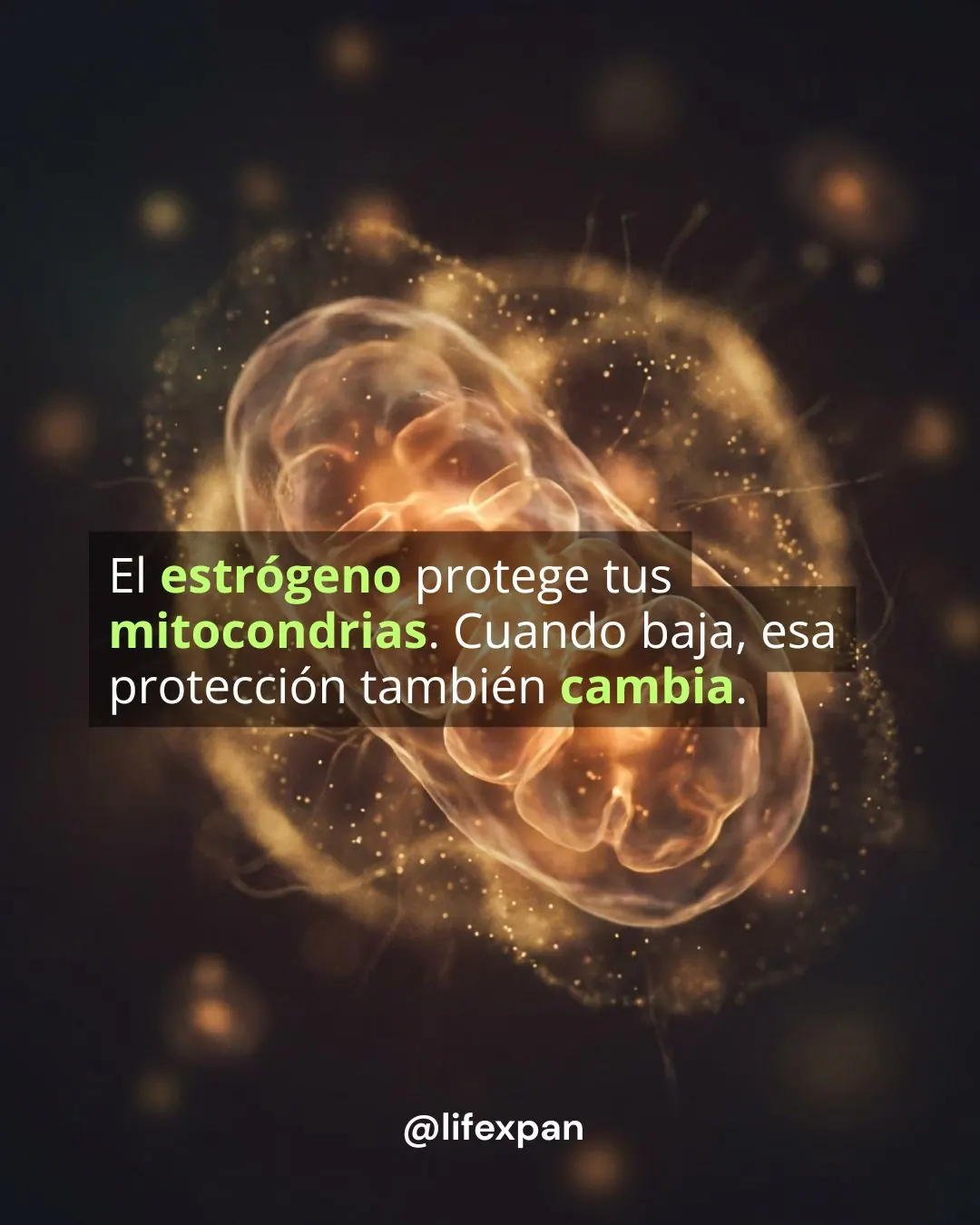
Mitochondria are the structures inside every cell responsible for producing ATP, the energy your body uses for everything. Recent research confirms something that was largely overlooked for years: oestrogen regulates genes linked to mitochondrial function and encourages the formation of new, efficient mitochondria, a process known as mitochondrial biogenesis.
💡 In simple terms
Think of oestrogen as a supervisor helping to keep your cells' energy factory in good working order — making sure enough production lines are built, and that they run well. When that supervisor steps back, the factory doesn't grind to a halt overnight, but it does start to lose efficiency.
What happens when oestrogen declines
During perimenopause and menopause, the drop in oestrogen isn't an isolated change: it translates into measurable shifts at the mitochondrial level. Research points to several specific mechanisms.
The first is a reduced capacity to produce energy. A 2024 study analysing real skeletal muscle biopsies in postmenopausal women found that those receiving hormone therapy — with oestrogen — showed greater mitochondrial respiratory capacity in muscle than those who weren't. In other words: lower oestrogen was measurably linked to less efficient muscle mitochondria.
The second is an increase in oxidative stress. Oestrogen helps activate an antioxidant protection mechanism inside the mitochondria (via a protein called SIRT3, which in turn protects the enzyme SOD2). When oestrogen drops, this protection weakens, leaving mitochondria more exposed to damage from free radicals.
The third directly affects that feeling of brain fog: oestrogen also acts on the brain, helping neurons take up glucose efficiently to produce energy. As it declines, this process becomes less smooth — which helps explain why so many women describe perimenopause as a stage where "they can't think as clearly as before".
🔬 Key fact
The tissues most affected by this decline are precisely the ones that use the most energy: the brain, muscle and ovaries. It's no coincidence that fatigue, brain fog and changes in muscle strength are such characteristic symptoms of this stage — all three share the same mitochondrial root.
Why this matters more than it seems
Understanding this mechanism changes the conversation in two important ways.
The first: it validates something many women feel and that is often dismissed. Perimenopausal fatigue isn't "overreacting" or "lacking willpower" — it has a concrete physiological basis, one that is measurable and well documented in recent scientific literature.
The second: it opens the door to thinking about this stage not only in hormonal terms, but also in terms of cellular health. Alongside decisions about hormone therapy — which are strictly a matter for a medical conversation — there are day-to-day factors that influence how well the mitochondria function during this process: strength exercise, which directly stimulates mitochondrial biogenesis; rest, when a good part of cell repair processes take place; and nutritional support for energy and antioxidant protection.
✨ The key idea
The fatigue of perimenopause and menopause isn't a failure of character. It's partly a story of mitochondria receiving less hormonal protection than before — and that shift completely changes how it's worth approaching it.
What can support you through this process
No supplement replaces a conversation with a professional about this stage, nor does it replace any medical decisions that may be needed. But there's a legitimate place for nutritional support for cellular energy, precisely because the underlying challenge is mitochondrial.
Coenzyme Q10 is involved in ATP production within the mitochondria and acts as an antioxidant in their membranes — exactly the kind of support that makes sense when the natural protection once provided by oestrogen is reduced. NR, for its part, helps replenish the NAD⁺ that mitochondria need to function, which also declines with age independently of the hormonal process.
⚠️ An important note
Hormone therapy and any decision related to the medical management of menopause should always be discussed with a healthcare professional — it's an individual clinical decision that depends on your medical history. Food supplements do not replace that approach or a varied and balanced diet; at most, they are an additional support.
Conclusion
Next time someone tells you the tiredness of this stage is "just your age", you can know there's a more precise explanation: it's largely a story of mitochondria that have lost part of the protection oestrogen once gave them. Understanding why doesn't change the biology — but it does change how you treat yourself while going through it.
⚡ Support for cellular energy · LifeXpan®
Pure NR and CavaQ10® + TetraSOD®: a NAD⁺ precursor and water-soluble coenzyme Q10, designed to support cellular energy at any stage of life.
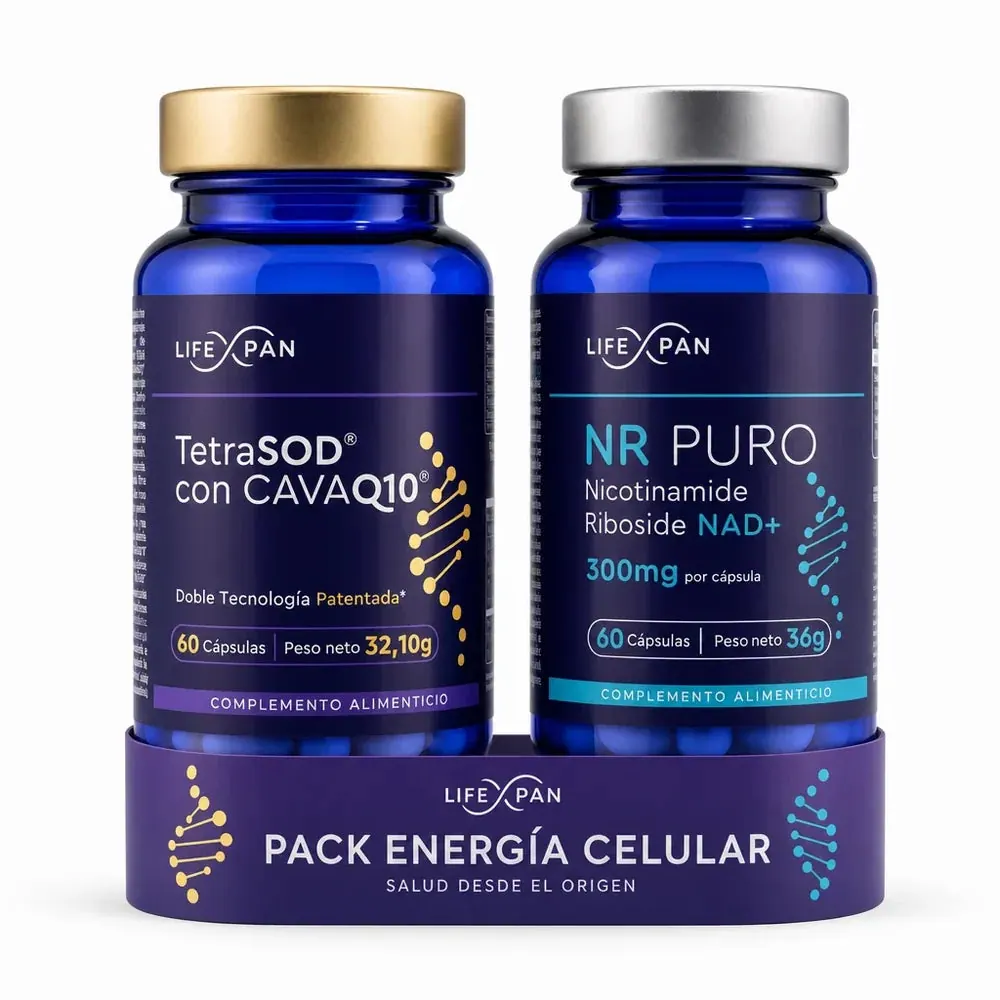
⚡ CavaQ10® + TetraSOD® · 🧬 Pure NR
Scientific references
Moreira-Pais, A. et al. (2024). Estrogenic control of mitochondrial function. Free Radical Biology and Medicine.
Kleis-Olsen, A.S. et al. (2024). Metabolic flexibility in postmenopausal women: hormone replacement therapy is associated with higher mitochondrial content, respiratory capacity, and lower total fat mass. Acta Physiologica, e14117.
Zhao, Y. et al. (2025). Regulation of mitochondrial dysfunction by estrogens and estrogen receptors. Basic & Clinical Pharmacology & Toxicology.
Ko, S.H. & Kim, H.S. (2020). Menopause-associated lipid metabolic disorders and foods beneficial for postmenopausal women. Nutrients, 12(1), 202.
Torres, M.J. et al. (2018). Mitochondrial dysfunction and its role in metabolic and neurodegenerative diseases. Nature Reviews Endocrinology.
Informative content. This does not constitute an authorised health claim or medical advice. Food supplements are not a substitute for a varied and balanced diet or for the advice of a healthcare professional.
perimenopause fatigue extreme fatigue before periods in perimenopause how to support your energy during menopause energy and menopause oestrogen and mitochondria causes of menopause fatigue menopause brain fog why am I more tired during menopause why do I have so little energy in perimenopause what's really happening inside your body during menopause the link between oestrogen and cellular energy